1. What your shingles are made of
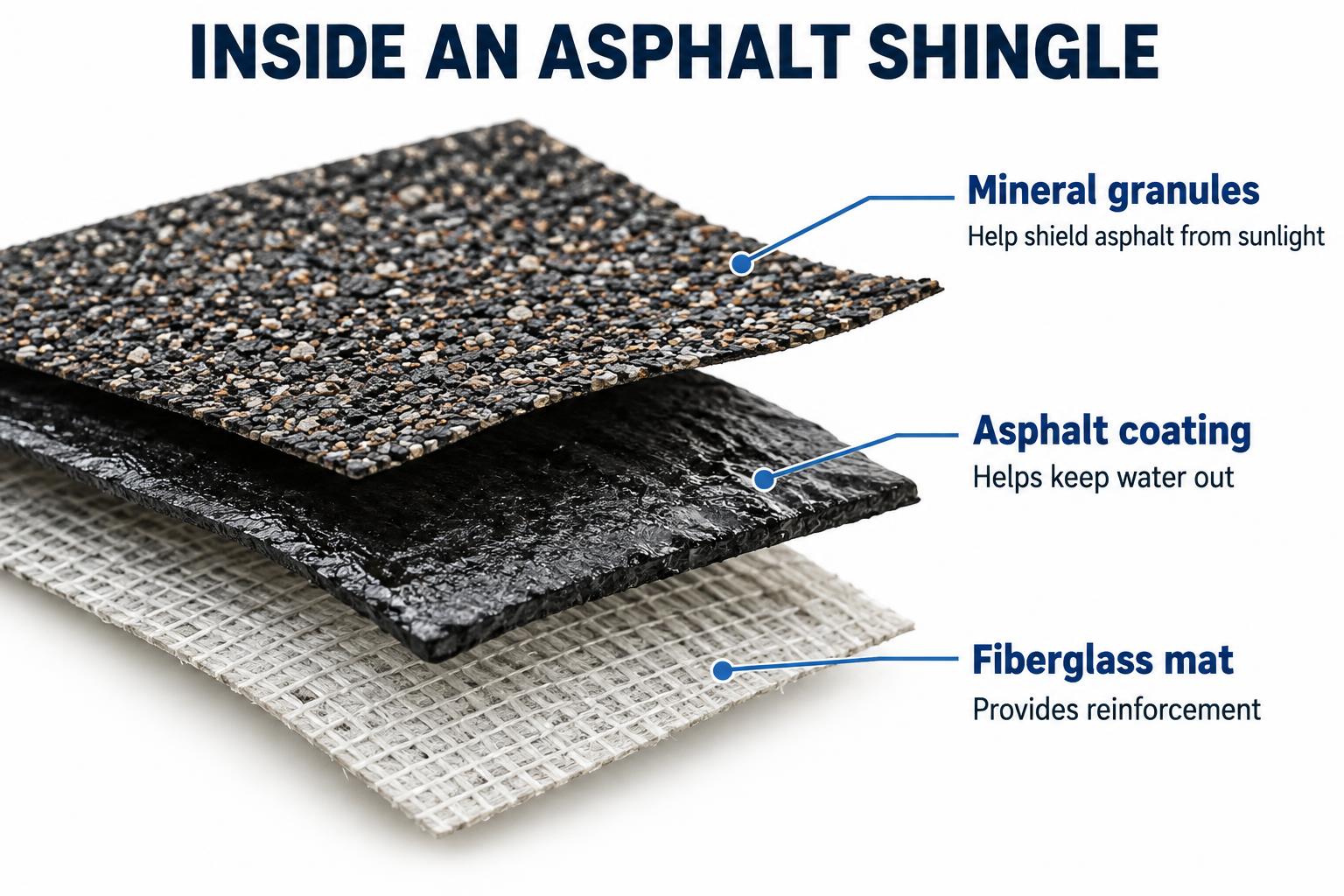
Most American homes have asphalt shingles: a fiberglass mat coated in asphalt and topped with mineral granules. The asphalt keeps water out. The granules shield the asphalt from the sun.
2. Why they dry out
Asphalt contains oils that keep it flexible. Year after year of UV rays, heat and rain pull those oils out. The shingle stiffens, then cracks, curls and sheds granules.
3. Why roofs age fast
Intense sun, high heat, humidity and storms mean shingles lose their oils faster, especially in warm or humid climates. Humidity also feeds moss, algae and black streaks.
Aging is a process, not a birthday
Two roofs installed in the same year can age differently. Sun exposure, ventilation, weather and maintenance all matter. Age is a useful starting point, but condition determines the next step.
4. Moss, algae and black streaks
Those dark streaks are living growth. They hold moisture against your roof and speed up wear. Cleaning them off the right way matters before any treatment.
5. Signs your roof is getting dry
- Faded or chalky look
- Granules in gutters
- Small cracks
- Curling edges
- Streaking
6. What a revival treatment does
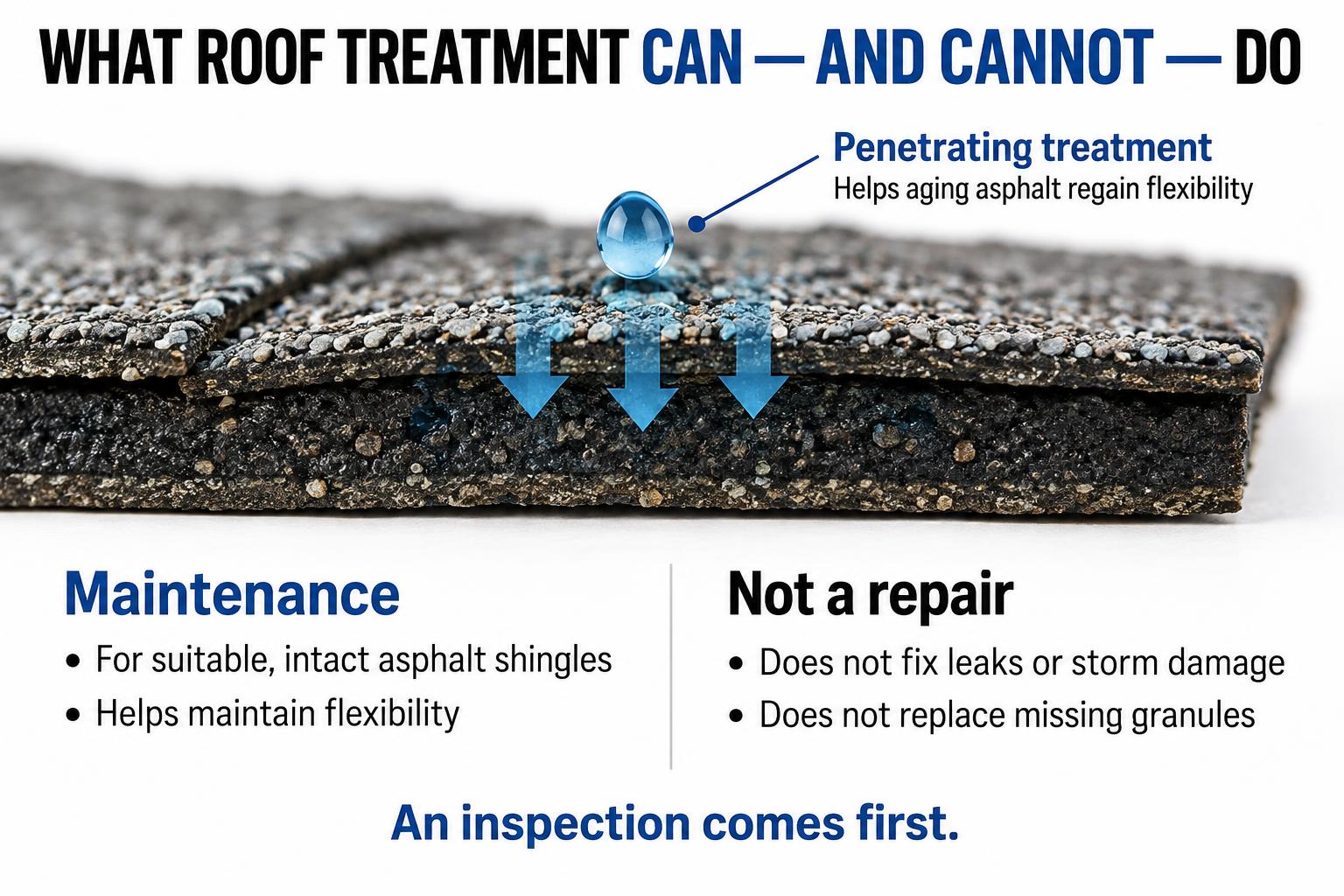
A revival treatment replaces some of the lost oils so the shingles regain flexibility and hold their granules better. Think of it like moisturizer for your roof.
7. What to do next
Observe from the ground, note visible changes and review maintenance and replacement options. If you notice leaks or damage, ask a qualified roofing professional for an assessment.