Understanding Your Roof’s Condition
Learn the difference between aging shingles and physical damage. This checklist explains common considerations; it is not a substitute for an inspection.
Learn the difference: aging vs. damage
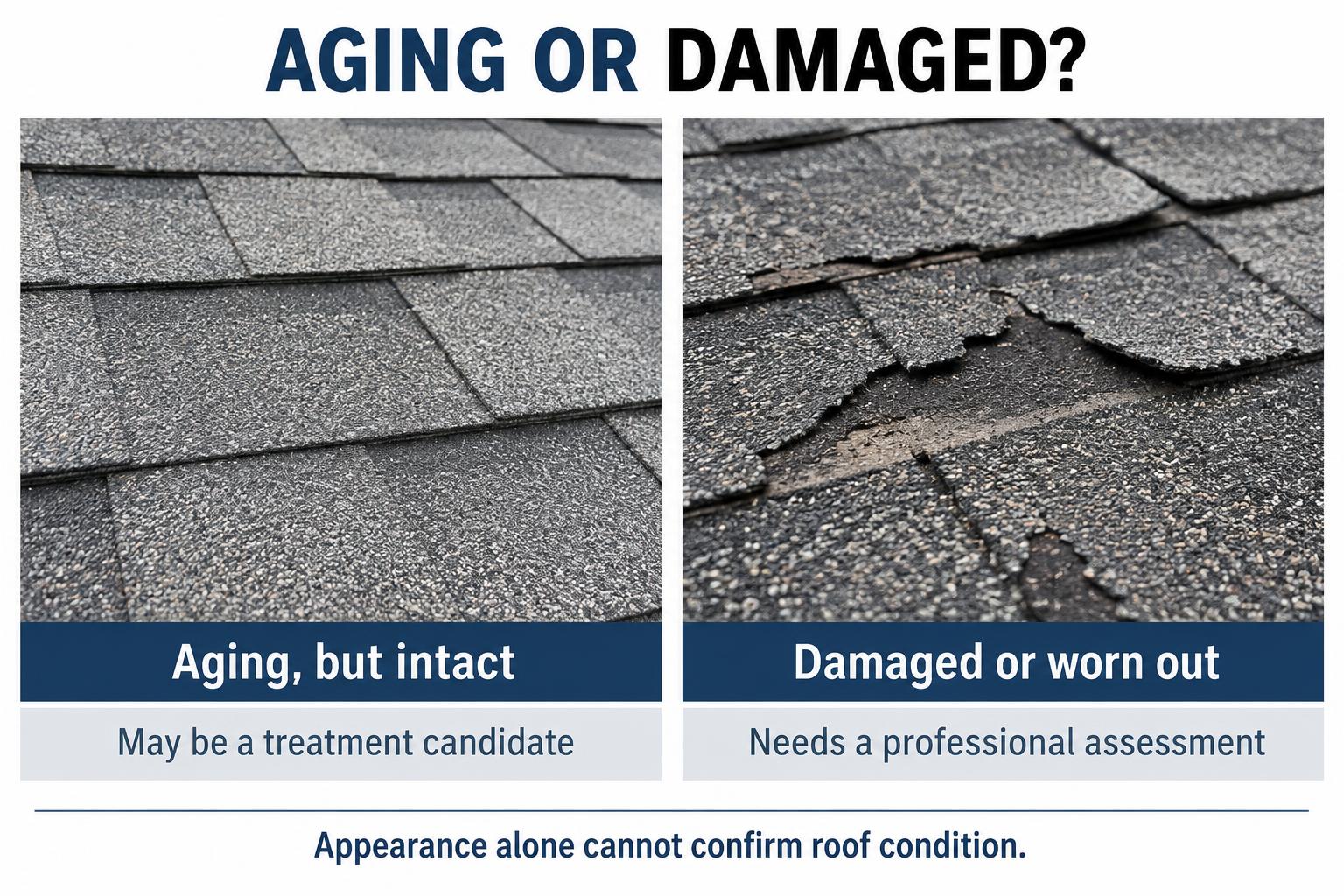
Often a good fit
- Asphalt shingle roof
- Roof roughly 8 to 18 years old (some younger or older roofs qualify too)
- Shingles still mostly intact with granules in place
- No active leaks
- Architectural or 3-tab shingles that are dry or faded but flat
- Roof gets lots of sun and heat
Probably not a fit
- Active leaks or water stains on ceilings
- Soft or spongy spots in the roof deck
- Widespread cracking or curled up shingles
- Large bald areas where granules are gone
- Hail or wind damage
- Metal, tile or flat roofs
Self check: 3 things to look at from the ground
Stay on the ground. Do not climb onto your roof or lift shingles to check them; leave close-up inspection to a professional.
- 1
Look at your gutters: Heavy piles of gritty granules can mean advanced wear.
- 2
Look at the shingle edges: Curling or cupping is a warning sign.
- 3
Look for dark streaks, moss or green patches: These are cosmetic and cleanable, but they mean moisture is sitting on the roof.
Not sure? Ask a qualified roofing professional to explain the condition and your options.
Keep learning about your roof
Understand the materials and the signs of wear.
What cleaning and rejuvenation do—and do not do.
Consider maintenance, repairs and replacement.
Weather, costs, warranties and practical limits.